
Rector Maria Moreno: “The University of Sannio is an open, secular community. The strength and future of our region lie in its young people and in our willingness to invest in them.”
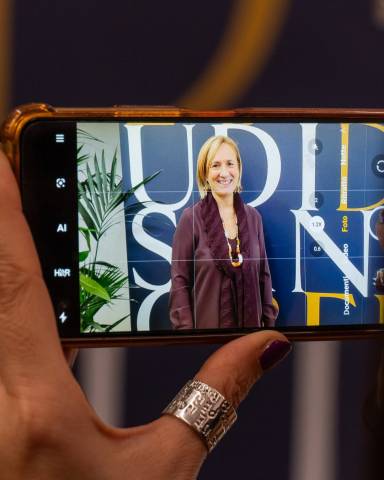
A week after taking office, the Rector of the University of Sannio, Maria Moreno, expressed her heartfelt gratitude for the many letters, messages of esteem, and signs of attention received from institutions, associations, and academic and civil organisations.
“This closeness,” she said, “confirms to me that the University of Sannio is seen as a valuable resource for the region — a cultural and social point of reference in which many wish to continue investing.”
The Rector then reiterated the apolitical and secular role of the University of Sannio, founded on freedom of thought, pluralism, and the ability to engage in dialogue with all components of the community.
“The university,” she added, “is a space for dialogue, where knowledge does not take sides but builds bridges. Our strength lies in our ability to listen, welcome, and translate the needs of the region into shared, concrete actions. Working together is essential to make knowledge a driving force for sustainable and inclusive development.”
This appeal for collaboration comes at a delicate moment for the Italian university system. A recent report by the National Research Council (CNR) on research and innovation has raised the alarm over a so-called “demographic ice age”: by 2041, Italy is expected to lose around 512,000 young people of university age compared to 2023 — with a particularly severe impact on the South.
“Faced with a figure that calls into question the very future of the university system, we cannot simply stand by,” said Rector Moreno. “This is the time to share a common, long-term vision. We must implement convergent policies capable of uniting institutions, universities, businesses, and the wider community.
“We need a more flexible educational offer aligned with new professional scenarios, stronger international appeal, and the creation of a genuine system of lifelong learning — one that enables both students and professionals to update their skills and face present-day changes with awareness.”
Finally, the Rector emphasised the importance of making university education truly accessible, by investing in better transport and connectivity and in student support policies, so that no one is excluded from the opportunity to learn and build their own future.
“The wealth and the future of our region lie in young people — and in how much we are willing to invest in them.”